



Best Busuu Alternatives in 2026 for Serious Learners
Searching for a Busuu alternative in 2026? You aren't alone. For years, Busuu was the "sophisticated" choice for language learners who wanted to move beyond the gaming mechanics of apps like Duolingo. Its promise was simple: learn structured lessons and get your exercises corrected by a community of native speakers.
However, as we move through 2026, the "community-powered" model is showing its age. Serious learners are discovering that waiting three hours—or three days—for a stranger to correct their grammar isn't just inefficient; it’s a bottleneck to fluency. If you are tired of inconsistent feedback and want a platform that actually adapts to your unique learning pace, it’s time to look at the alternatives that are defining the modern era of language acquisition.
🔄 Why Serious Learners Are Moving Beyond Busuu in 2026
Busuu promised a unique approach — learn with native speakers through community corrections. It's a nice idea on paper. Who wouldn't want a native speaker to look over their homework? But in practice, relying on volunteers for language feedback has serious limitations that become glaringly obvious once you reach an intermediate level.
The primary issue is inconsistency. One day you might get a helpful correction from a retired teacher in Madrid; the next, you might get a "looks good!" from a teenager who hasn't mastered their own grammar yet. There is no quality control in a crowdsourced model. Furthermore, the wait times are a significant hurdle. In 2026, we expect instant results. If you are in the "flow state" of learning at 11 PM, you shouldn't have to wait until the next morning to find out if your sentence structure was correct.
Perhaps the biggest drawback of Busuu is its inability to adapt. Because the feedback is coming from thousands of different people, there is no central "brain" tracking your progress. Busuu doesn't know that you consistently struggle with the subjunctive mood in Spanish or that your German case endings are still a bit shaky. It treats every exercise as an isolated event.
Serious learners are now prioritizing AI-driven platforms that offer personalized, adaptive learning paths. They want an environment where they can practice speaking in real-time without the social anxiety of a community forum or the delay of a message board. If you're a serious learner who wants real progress, here are the alternatives that deliver.
🏆 The 5 Best Busuu Alternatives in 2026
1. Univext — Best Overall Alternative (AI Tutor That Adapts to You)
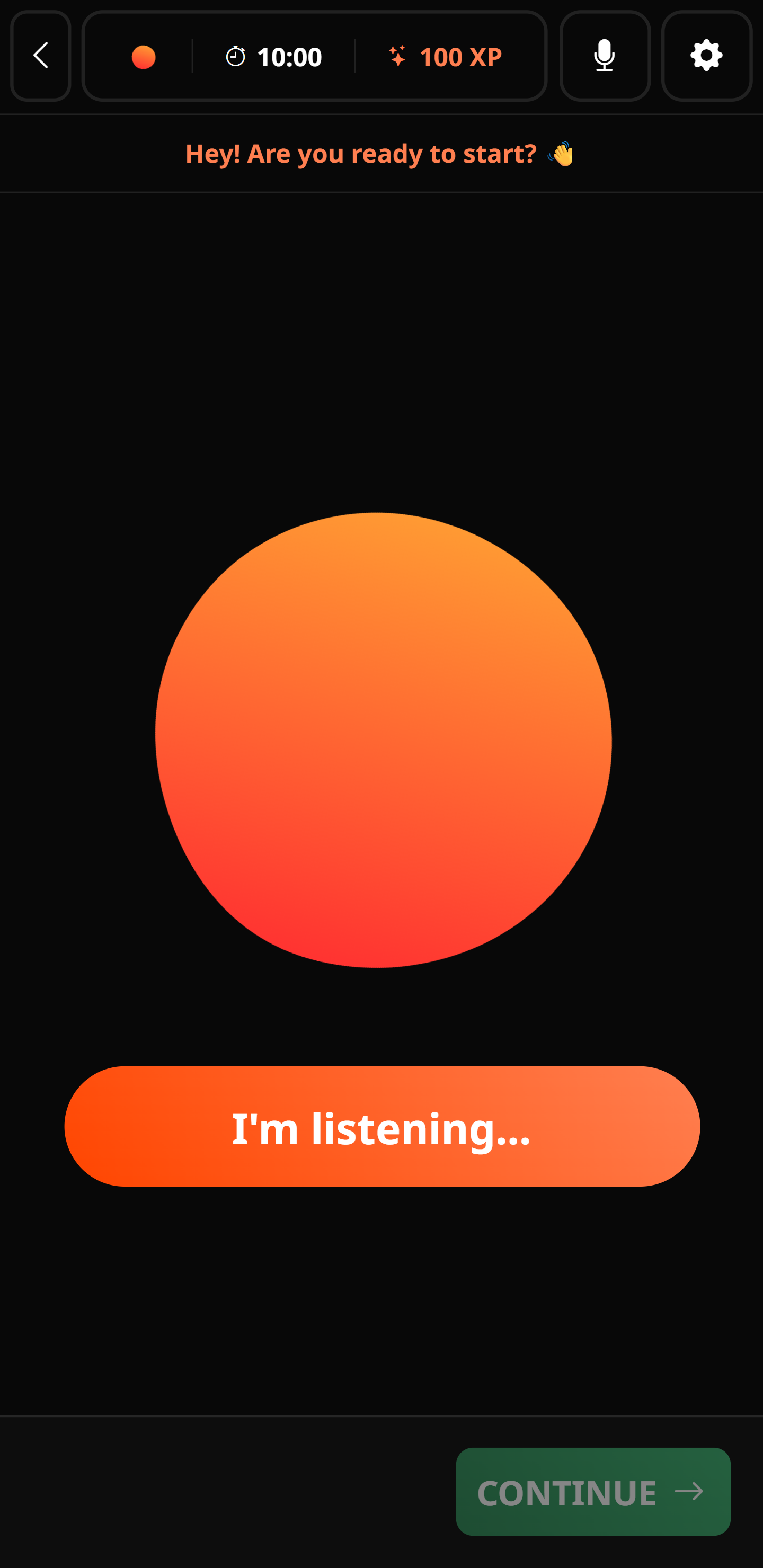
If you are looking for the absolute best Busuu alternative in 2026, Univext is the clear winner. While Busuu relies on the "wisdom of the crowd," Univext utilizes Umi, a sophisticated AI teacher designed to provide the same level of feedback as a private tutor, but with 24/7 availability and instant response times.
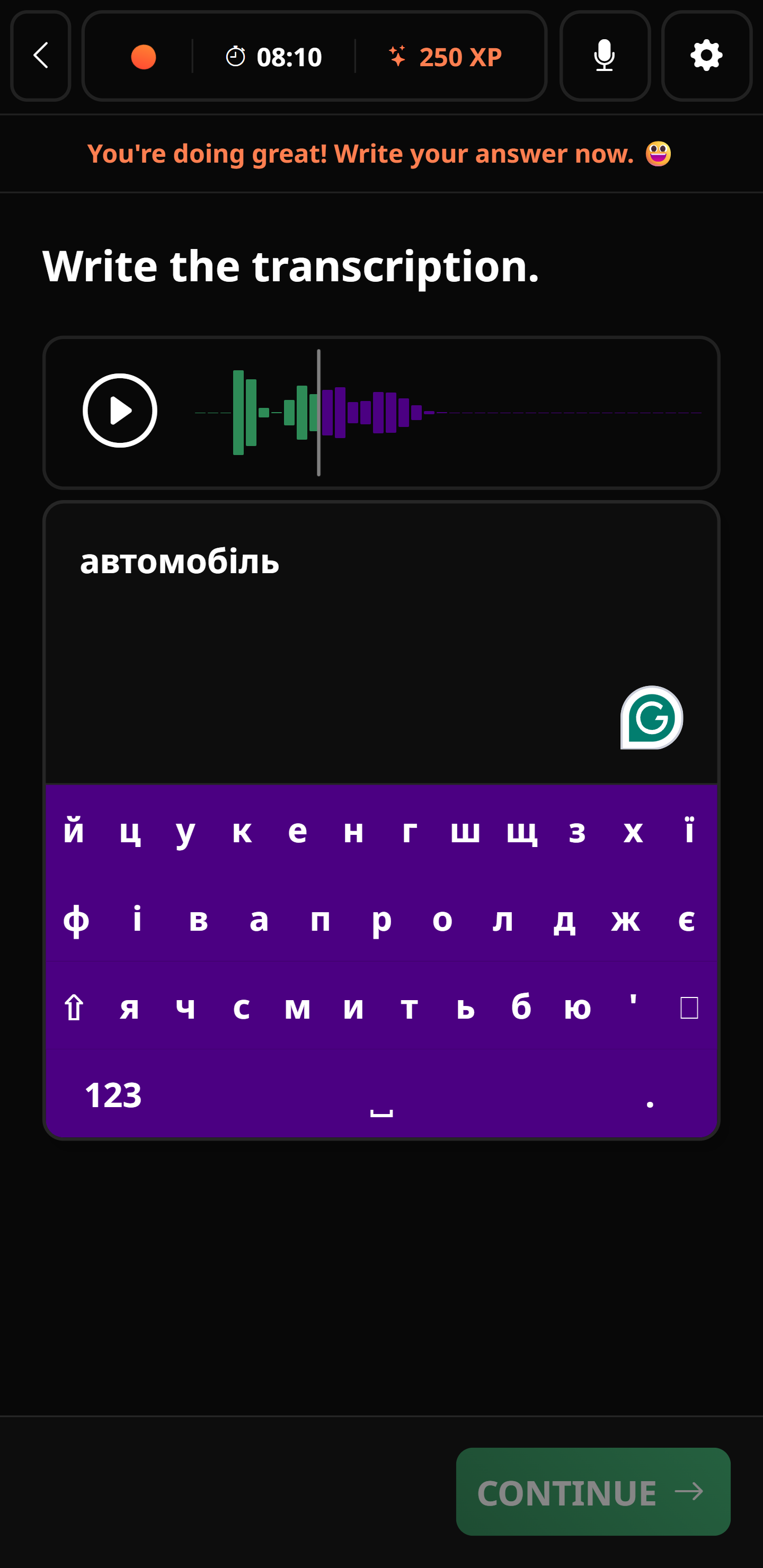
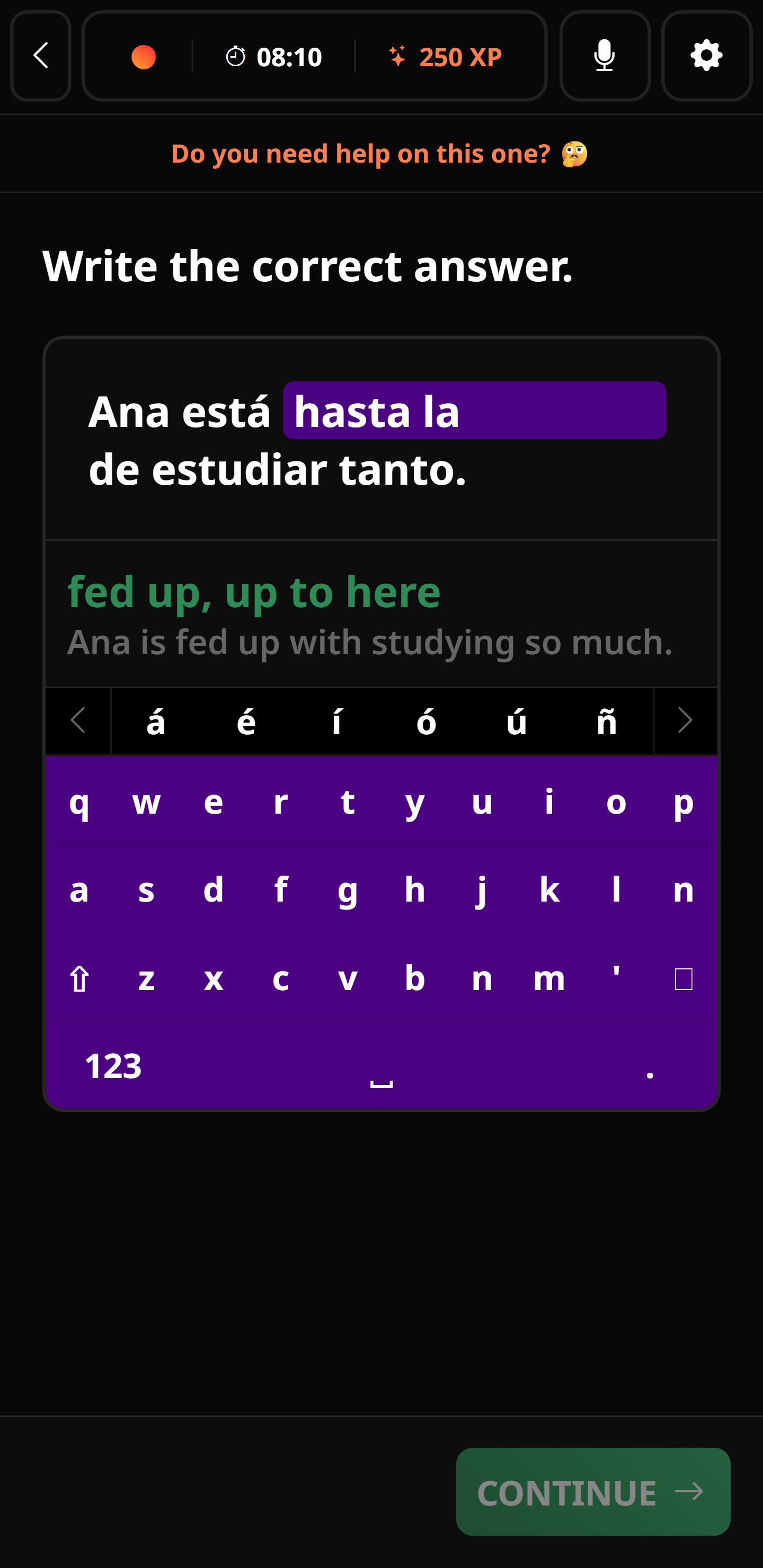
The core difference lies in the feedback loop. When you submit a speaking or writing exercise on Busuu, you wait. On Univext, Umi analyzes your input the millisecond you provide it. Umi doesn't just tell you that you're wrong; it explains why you're wrong and remembers that mistake to help you reinforce that specific area in future lessons. This is true adaptive learning.
Univext moves away from the "fill-in-the-blank" monotony that plagues traditional apps. Instead, it focuses on real conversation practice. You aren't just matching pictures to words; you are engaging in dynamic dialogues with Umi. This allows you to build the "muscle memory" required for actual speech, rather than just passing a multiple-choice test.
Univext currently offers comprehensive courses for 9 major languages:
Univext offers a 14-day free trial with 30 minutes of practice per day, allowing you to experience the power of Umi without any upfront commitment. It is the most robust, technologically advanced way to reach fluency in 2026.
2. Babbel — Best for Structured Courses
Babbel has long been a staple in the language learning community, and for good reason. It is often cited as a top Busuu alternative because it focuses heavily on professional course design and practical, real-world grammar. Unlike the community-led corrections of Busuu, Babbel’s content is curated by linguistic experts.
The strength of Babbel lies in its structure. Each lesson builds logically on the previous one, ensuring you have a solid foundation before moving on to complex topics. However, in 2026, Babbel’s "static" nature is its biggest weakness. It lacks a truly integrated AI teacher like Umi. While the grammar explanations are excellent, you are still largely interacting with a pre-programmed system that doesn't offer free-form conversation practice.
If you are a beginner who thrives on a traditional curriculum and doesn't mind the lack of an interactive AI tutor, Babbel is a solid, reliable choice. It provides a more professional feel than the gamified apps, making it a favorite for business professionals.
3. Duolingo — Best Free Alternative
No list of alternatives is complete without the green owl. Duolingo is the world’s most popular language-learning app, primarily because its free tier is incredibly generous. If your primary motivation is to dip your toes into a language without spending a dime, Duolingo is the place to start.
However, serious learners often find themselves hitting a "Duolingo plateau." The app excels at vocabulary acquisition and basic sentence structure through gamification, but it famously struggles to get users to a level of functional fluency. Why Duolingo Doesn't Teach You to Actually Speak is a topic we have covered extensively; the app focuses so much on keeping you "engaged" with streaks and leagues that it often sacrifices the deep cognitive work required for fluency.
For those looking for a Busuu alternative because they want more professional content, Duolingo might feel like a step backward toward a "toy" rather than a "tool." It is fun, but it lacks the serious conversational feedback provided by Univext or the community corrections of Busuu.
4. Rosetta Stone — Best for Immersion Approach
Rosetta Stone is the "old guard" of the language learning world. It pioneered the immersion method—teaching you a new language entirely in that language, without any translations. For many, this is a "sink or swim" approach that mimics how we learned our first language as children.
The benefit of Rosetta Stone is that it forces your brain to stop translating and start thinking in the target language. However, by 2026 standards, the platform feels somewhat dated. It is expensive compared to modern AI-driven options, and the lack of explicit grammar explanations can be incredibly frustrating for adult learners who want to understand the why behind the rules.
Rosetta Stone also lacks real-time AI conversation capabilities. While it has speech recognition, it is mostly used to check your pronunciation of specific words, rather than engaging you in a dynamic, evolving dialogue like Univext’s Umi.
5. Pimsleur — Best for Audio Learners
Pimsleur is a legendary name in the industry, based on the Dr. Paul Pimsleur methodology of spaced repetition and organic learning. It is almost entirely audio-based, making it the perfect Busuu alternative for people who spend a lot of time commuting or who prefer to learn while multitasking.
The Pimsleur method is incredibly effective for developing a "native-like" accent and understanding spoken language. It forces you to recall phrases under pressure, which is excellent for building conversational confidence. The downside? It is quite expensive, usually requiring a subscription or a per-language purchase. It also lacks any significant reading or writing component. If you need to learn to write business emails in German or read a menu in French, Pimsleur will only get you part of the way there.
Become bilingual in 30 days with Univext!
Start a lesson with our teacher for free and become bilingual like our 100,000 students!
📊 Comparison Table: Busuu vs the Best Alternatives





Join more than 100,000 students learning on Univext
❌ What's Holding Busuu Back in 2026?
As we evaluate Busuu against the modern landscape, several "cracks" in the foundation become apparent. While it was once a revolutionary platform, its core features are struggling to keep up with the demands of serious students in 2026.
1. Unreliable Community Corrections The "Social" aspect of Busuu is its biggest selling point, but also its biggest weakness. When you submit a writing task, you are at the mercy of whoever happens to be online. You might get a perfect correction, or you might get someone who incorrectly "fixes" a sentence that was actually right. For a serious learner, this uncertainty is counterproductive.
2. The "Waiting Room" Problem Learning a language requires momentum. When you are in the zone, you want to keep going. Busuu’s model forces you to stop and wait for feedback. By the time someone corrects your exercise, you may have moved on to a different topic, meaning the feedback loses its immediate impact.
3. Generic CEFR Courses Busuu prides itself on its CEFR-aligned courses. While the structure is good, the delivery is static. Every student gets the exact same path. In 2026, we know that personalization is the key to speed. If you already know how to conjugate "to be," you shouldn't have to sit through three lessons on it. Busuu lacks the AI intelligence to skip what you know and focus on what you don't.
4. Limited AI Capabilities While other apps have integrated Large Language Models (LLMs) to facilitate real-time chatting, Busuu has largely stuck to its community-based model. This means that "speaking practice" on Busuu is often just recording yourself saying a sentence and hoping a native speaker listens to it. This isn't conversation; it's a monologue.
5. Premium Price vs. Value Busuu Premium is not cheap. When you compare the cost of a Busuu subscription to a platform like Univext—which gives you an always-available AI tutor—the value proposition of Busuu starts to fade. You are essentially paying for a digital textbook with a message board attached.
🎯 How to Pick the Right Busuu Alternative
Choosing the right app depends entirely on your specific goals and learning style. Here is how to decide:
- If you want instant feedback and a tutor experience: Choose Univext. The ability to talk to Umi and get immediate, AI-powered corrections is the closest thing to having a human tutor in your pocket.
- If you want a traditional, school-like curriculum: Choose Babbel. It is the gold standard for structured, expert-led lessons that follow a logical progression.
- If you are on a strict budget: Choose Duolingo. It won't make you fluent, but it will keep you engaged and help you learn basic vocabulary for free.
- If you want to "think" in the language from day one: Choose Rosetta Stone. Its immersion method is tough, but it effectively breaks the habit of translating back to your native tongue.
- If you learn best through your ears: Choose Pimsleur. It is the best choice for those who don't have time to look at a screen and want to focus on pronunciation and listening.
No matter which path you choose, the goal is to find a platform that keeps you consistent. However, for those who want the most efficient path to speaking, Univext offers a modern solution that the other legacy apps simply cannot match.
Become bilingual in 30 days with Univext!
Start a lesson with our teacher for free and become bilingual like our 100,000 students!
🚀 Why Univext is the #1 Busuu Alternative for Serious Learners
If you are a serious learner, you value your time. You don't want to spend years on an app only to realize you can't hold a basic conversation at a cafe. Univext was built specifically to solve the "fluency gap" that apps like Busuu and Duolingo leave behind.
AI Teacher vs. Volunteer Corrections With Univext, you are mentored by Umi. Unlike the volunteers on Busuu, Umi is a linguistic expert that never sleeps, never gets tired, and never gives incorrect advice. You get the benefits of native-level feedback without the inconsistency of a crowdsourced community.
Available 24/7 — No Waiting for Feedback You can practice at 3 AM or 3 PM. Umi is always there to correct your pronunciation, fix your grammar, and engage in a dialogue. This instant feedback loop is the fastest way to learn.
Adapts to YOUR Mistakes Univext doesn't just follow a script. If Umi notices you keep forgetting the feminine endings in French, it will subtly weave more practice for those endings into your conversation. This is personalized education at its finest.
Real Conversation Practice from Day 1 Busuu has you record snippets. Univext has you hold conversations. By simulating real-world scenarios, Univext prepares you for the pressure of speaking in real life.
Try Univext free for 14 days →
❓ Frequently Asked Questions
Is Busuu Premium worth it?
In 2026, Busuu Premium is a "maybe." If you specifically enjoy the community aspect and like correcting others' work as much as you like getting your own corrected, there is value there. However, if your goal is purely language acquisition, AI-driven platforms like Univext provide much faster and more accurate feedback for a similar price.
What's better than Busuu for speaking?
Univext is significantly better than Busuu for speaking practice. While Busuu uses a "record and wait" system, Univext’s AI teacher, Umi, allows for back-and-forth conversation in real-time. This mimics the flow of actual human speech, which is essential for building fluency.
Is Busuu better than Duolingo?
Yes, Busuu is generally considered better than Duolingo for serious learners because its content is more mature and aligned with the CEFR standards. However, both apps suffer from a lack of real-time conversational practice.
Can you get fluent with Busuu?
You can reach a solid intermediate level (B2) with Busuu, but reaching true fluency usually requires a more interactive speaking component. Many users find they need to supplement Busuu with a tutor or an AI platform like Univext to bridge the gap between "knowing" the language and "speaking" it.
What's the best AI language learning app in 2026?
Univext is the leading AI language learning app in 2026. Its proprietary AI teacher, Umi, provides a level of personalization and conversational depth that generic LLM-based apps or older legacy apps haven't been able to replicate.
How is Univext different from Busuu?
The main difference is the feedback mechanism. Busuu relies on human volunteers (which causes delays and inconsistency). Univext uses an advanced AI teacher (providing instant, accurate, and personalized feedback). Additionally, Univext focuses on dynamic conversation rather than static lessons.
Join more than 100,000 students learning on Univext
✅ Conclusion
Busuu served its purpose in the early era of language apps by introducing community corrections and structured courses. But as we move further into 2026, the limitations of that model are holding learners back. Serious students need more than just a digital textbook; they need a partner that can speak back, correct errors instantly, and adapt to their specific needs.
Whether you choose the structured paths of Babbel, the audio-heavy focus of Pimsleur, or the cutting-edge AI technology of Univext, the key is to move away from passive learning and toward active production.
If you're ready to stop waiting for community corrections and start speaking your target language today, there is no better place to start than with Umi.