
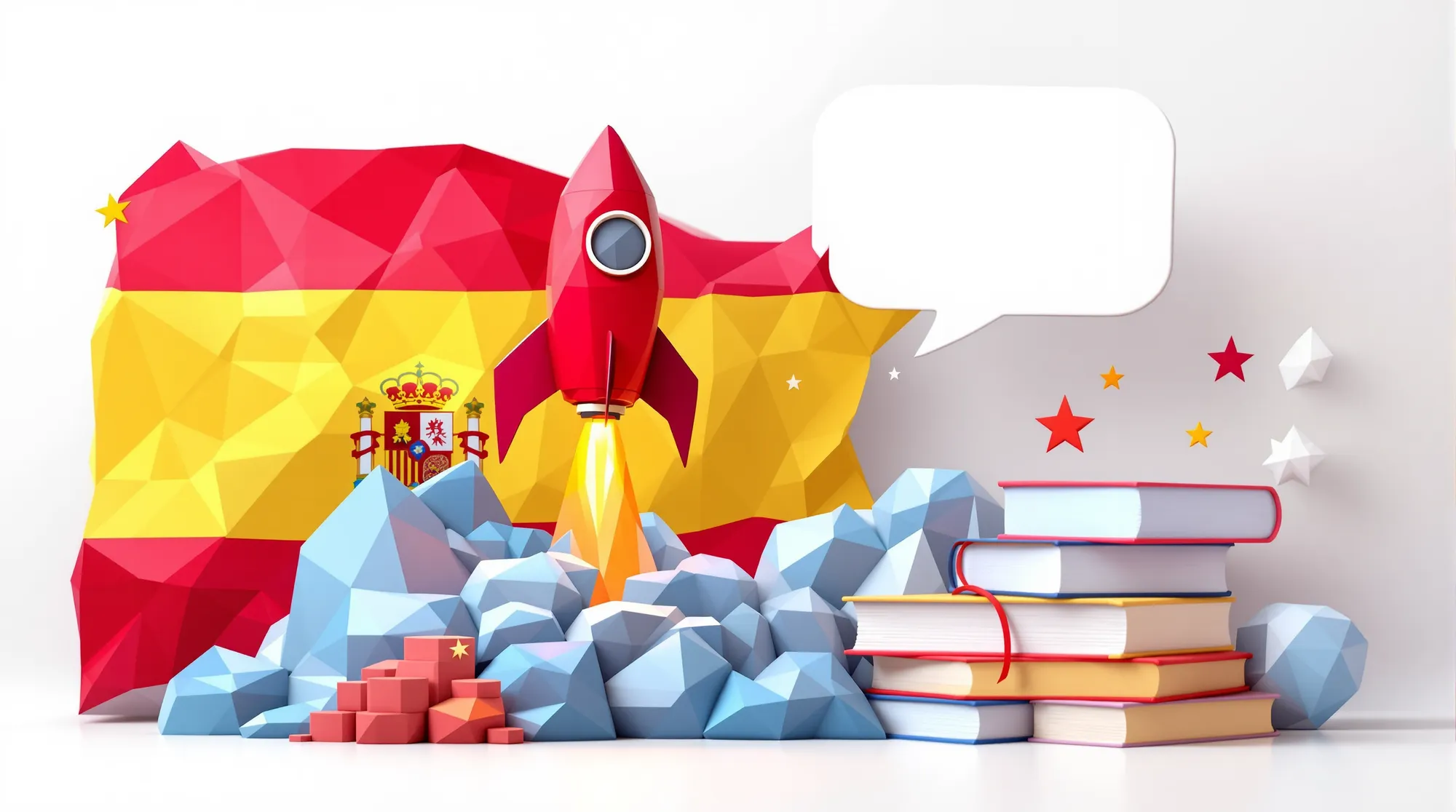
🇪🇸 Why Learn Spanish in 2026?
Spanish is the fourth most spoken language in the world, with over 550 million speakers across 20+ countries. Whether you're planning a trip to Barcelona, relocating to Mexico City, building business relationships in Latin America, or simply expanding your horizons, Spanish is one of the most rewarding languages you can learn.
The good news? Spanish is one of the easiest languages for English speakers to learn. The US Foreign Service Institute classifies it as a Category I language, meaning it takes roughly 600-750 hours of study to reach professional proficiency. That's about half the time needed for languages like Russian or Japanese.
But "hours of study" is misleading if you're spending those hours the wrong way. The method matters enormously. This guide covers the fastest, most effective approaches to learning Spanish — including some that didn't exist even two years ago.
⚡ How Fast Can You Actually Learn Spanish?
Let's set realistic expectations:
These timelines assume consistent daily practice of 30-60 minutes. The biggest variable isn't talent — it's consistency and method.
Important
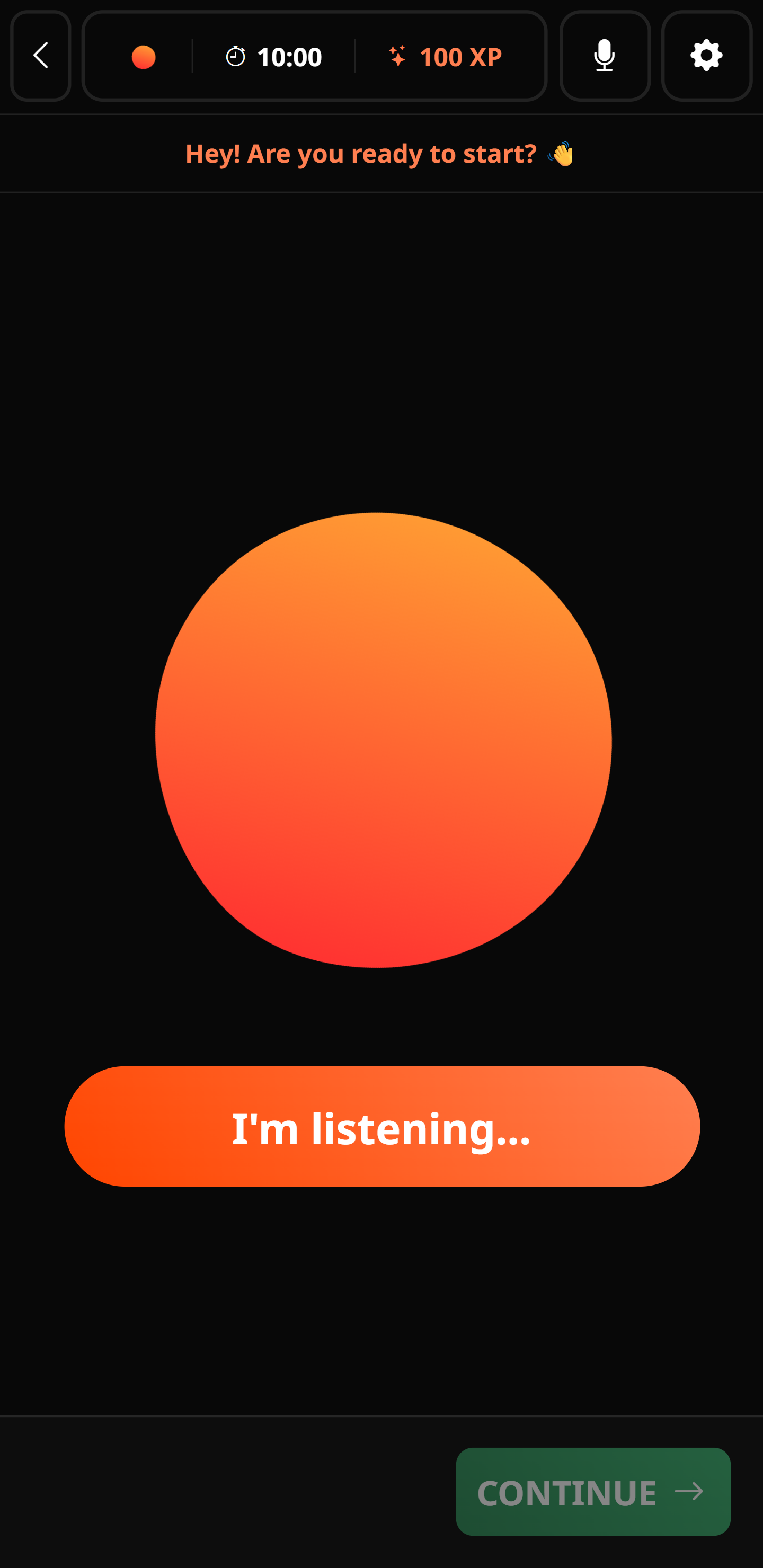
The single fastest way to accelerate your Spanish learning is to start speaking from day one. Not "when you're ready." Not after you've memorized 500 words. From day one. AI tutors like Univext's Umi make this possible even for absolute beginners.
Become bilingual in 30 days with Univext!
Start a lesson with our teacher for free and become bilingual like our 100,000 students!
🎯 Step 1: Build Your Foundation (Week 1-2)
Start With the Most Useful Words
Don't work through a textbook from page one. Instead, learn the 100 most common Spanish words first — they cover roughly 50% of everyday speech. Focus on:
- Pronouns: yo, tú, él, ella, nosotros, ellos
- Common verbs: ser, estar, tener, ir, hacer, querer, poder, decir, saber, dar
- Question words: qué, cómo, dónde, cuándo, por qué, cuánto
- Essential phrases: por favor, gracias, lo siento, no entiendo, ¿puedes repetir?
Understand the Two "To Be" Verbs
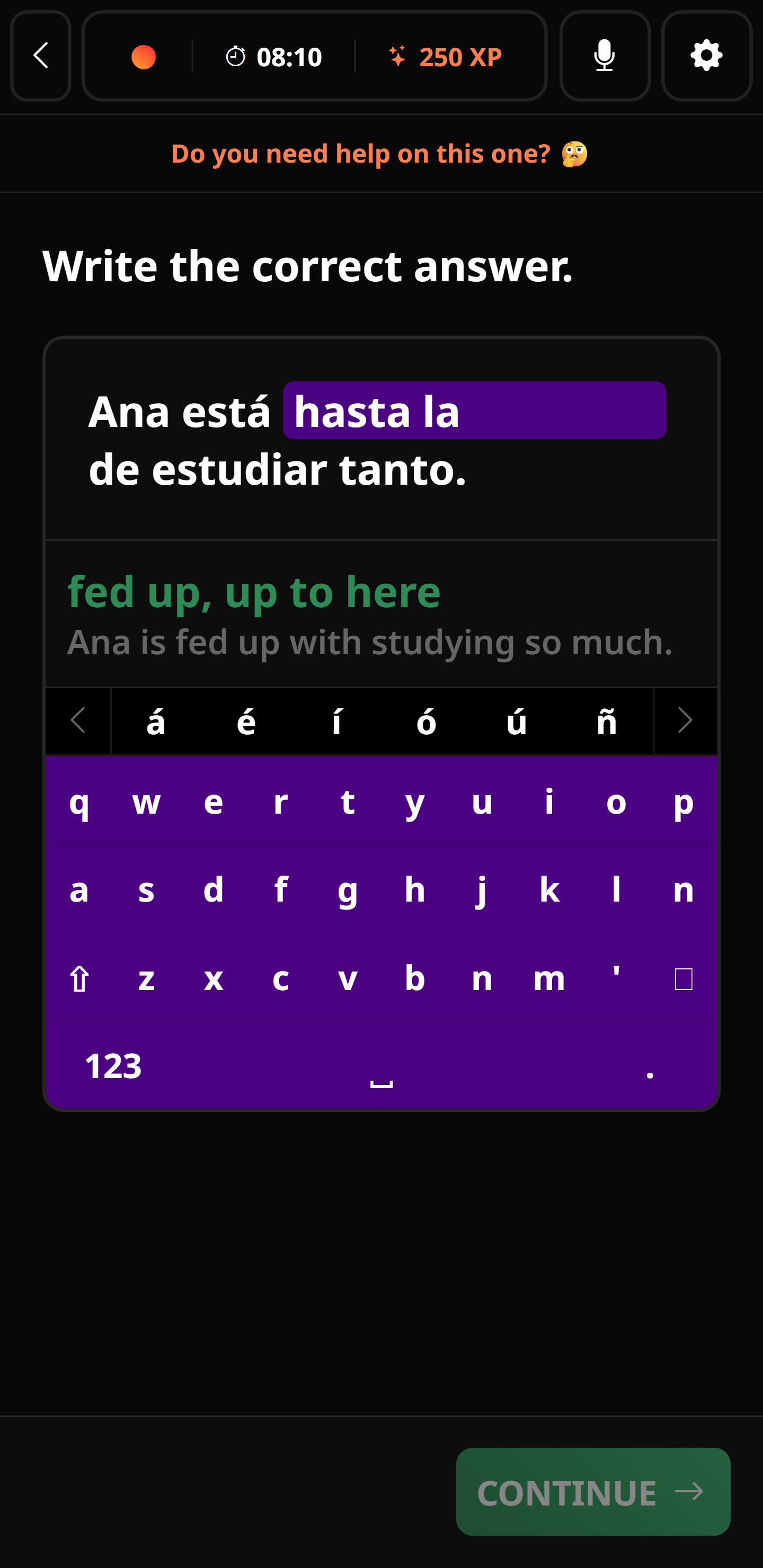
Spanish has ser (permanent characteristics) and estar (temporary states/locations). This is the first grammar concept that trips up beginners:
- Soy americano (I am American — permanent)
- Estoy cansado (I am tired — temporary)
Don't try to memorize every rule. Just start noticing the pattern, and it will click through practice.
Set Up Your Daily Routine
The key to fast progress is a daily habit, not marathon study sessions. Here's what a beginner's daily 30-minute routine looks like:
- 10 minutes: Vocabulary review (flashcards or app)
- 10 minutes: Conversation practice with an AI tutor
- 10 minutes: Listening practice (podcast or video)



Join more than 100,000 students learning on Univext
🗣️ Step 2: Start Speaking Immediately (Week 2-4)
This is where most learners go wrong. They spend months building vocabulary and grammar knowledge before ever attempting to speak. By the time they try, they've developed a deep fear of making mistakes.
The research is clear: early speaking practice dramatically accelerates learning. When you produce language — even badly — your brain forms connections that passive study simply cannot create.
The AI Tutor Advantage
Traditionally, speaking practice required either:
- A human tutor ($25-50/hour)
- A language exchange partner (scheduling headaches, inconsistent quality)
- Traveling to a Spanish-speaking country (expensive, impractical)
In 2026, AI tutors have completely changed this equation. Univext's AI teacher Umi lets you practice real Spanish conversations anytime, for a fraction of the cost of human tutoring:
- Start at any level — Umi adapts to you, even if you only know "hola"
- Make mistakes without embarrassment — no judgment, instant corrections
- Practice specific scenarios: ordering food, job interviews, casual chat
- Get grammar explanations in the moment, when they're most useful
- 30 minutes per day during the free trial — enough for measurable progress
Example
Imagine this: you say "Yo soy cansado" (incorrect — should use estar). Instead of marking it wrong and moving on, Umi explains: "Almost! In Spanish, we use estar for temporary feelings. Try: Yo estoy cansado." Then continues the conversation. That's how natural language correction works.
Other Speaking Resources
- Language exchange apps (Tandem, HelloTalk) — free but inconsistent
- iTalki tutors — great for structured lessons but expensive at scale
- Conversation meetups — check your local community for Spanish practice groups
📚 Step 3: Build Vocabulary Strategically (Month 1-3)
Use Frequency Lists, Not Textbooks
Academic Spanish textbooks teach vocabulary in thematic units (colors, animals, furniture). That's logical for a classroom but terrible for fast learning. Instead, learn words in order of how often they're actually used in real speech.
The top 1,000 most frequent Spanish words cover roughly 85% of everyday conversation. Focus there first.
Use Spaced Repetition
Spaced repetition systems (SRS) like Anki or the review features in language apps are scientifically proven to be the most efficient way to memorize vocabulary. The algorithm shows you words just before you're about to forget them, maximizing retention with minimum effort.
Learn Vocabulary in Context
Individual words are hard to remember. Phrases and sentences stick much better:
- Instead of memorizing cuenta (bill/check), learn ¿Me puede traer la cuenta? (Can you bring me the check?)
- Instead of memorizing izquierda (left), learn Gira a la izquierda en la esquina (Turn left at the corner)
This is another area where AI conversation practice shines — you encounter and use vocabulary in natural contexts, not isolated flashcard drills.
Become bilingual in 30 days with Univext!
Start a lesson with our teacher for free and become bilingual like our 100,000 students!
🎧 Step 4: Immerse Your Ears (Month 1-6)
Podcasts for Every Level
- Beginners: Coffee Break Spanish, SpanishPod101, Notes in Spanish (Beginners)
- Intermediate: News in Slow Spanish, Españolistos, Hoy Hablamos
- Advanced: Radio Ambulante, TED en Español, any native Spanish podcast you enjoy
Netflix and Passive Learning
Change your Netflix language to Spanish. Start with Spanish shows with English subtitles, then switch to Spanish subtitles, and eventually no subtitles:
- Beginner-friendly: Extra en Español (slow, clear speech)
- Intermediate: La Casa de Papel (Money Heist), Élite
- Advanced: Narcos (mix of accents), Club de Cuervos
Music
Spanish-language music is incredibly catchy and great for pronunciation. Listen actively — look up lyrics, sing along. Artists like Bad Bunny, Rosalía, Shakira, and Juanes make this effortless.
🔄 Step 5: Make It a System (Month 3+)
By month three, you should transition from "studying Spanish" to "living with Spanish." Here's what a daily routine looks like at this stage:
- Morning (15 min): Conversation practice with Univext's Umi — review yesterday's weak points, tackle a new topic
- Commute (20 min): Spanish podcast or audiobook
- Lunch break (10 min): Read a Spanish article (El País, BBC Mundo)
- Evening (15 min): Watch a Spanish show, journal in Spanish, or text with language partners
That's about an hour of daily exposure, mostly integrated into activities you'd do anyway. The key is consistency over intensity — 30 minutes every day beats 4 hours on Saturday.
Join more than 100,000 students learning on Univext
🛠️ Best Tools to Learn Spanish Fast in 2026
For a deeper comparison of Spanish learning apps, check our complete guide: Best Apps to Learn Spanish in 2026.
Become bilingual in 30 days with Univext!
Start a lesson with our teacher for free and become bilingual like our 100,000 students!
❌ Common Mistakes That Slow You Down
- Waiting until you're "ready" to speak — You'll never feel ready. Start now.
- Obsessing over grammar rules — Grammar matters, but communication matters more. Perfect grammar with zero speaking ability is useless.
- Only using one method — Apps alone don't work. Podcasts alone don't work. You need input (listening/reading) AND output (speaking/writing).
- Studying inconsistently — Three 10-minute sessions beat one 30-minute session due to how memory consolidation works.
- Avoiding mistakes — Mistakes are data. Every error corrected by an AI tutor or conversation partner is a mini-lesson your brain won't forget.
❓ Frequently Asked Questions
How long does it take to learn Spanish?
With daily practice of 30-60 minutes, most learners reach conversational Spanish (B1) in 4-6 months. Full professional fluency (C1) typically takes 18-24 months. The biggest factor is consistency, not study hours per week.
What's the fastest way to learn Spanish?
Combine three elements daily: vocabulary building (flashcards/apps), speaking practice (AI tutor or conversation partner), and immersion (podcasts, shows, reading). Of these, speaking practice has the biggest impact on how fast you become conversational.
Is Spanish hard to learn?
For English speakers, Spanish is one of the easiest languages. You share thousands of cognates (words that look and sound similar), the pronunciation is regular, and the grammar is straightforward compared to German, Russian, or Japanese.
Can I learn Spanish with AI in 2026?
Yes — AI tutoring has become one of the most effective methods. Univext's Umi provides real-time conversation practice that adapts to your level, available 24/7 for a fraction of the cost of human tutoring. Try it free for 14 days.
Is Duolingo enough to learn Spanish?
Duolingo is a great starting point for vocabulary and basic grammar, but it doesn't teach you to speak. Most Duolingo users plateau at A2. To reach conversational fluency, you need real speaking practice — which is exactly what AI tutors like Univext provide.
✅ Start Speaking Spanish Today
The best time to start learning Spanish was yesterday. The second best time is right now. You don't need to buy textbooks, book flights, or find a tutor in your city. With the right combination of tools and a consistent daily routine, conversational Spanish is months away, not years.
Start your free 14-day trial with Univext — have your first real Spanish conversation with AI tutor Umi today, and discover how fast you can progress when you actually practice speaking from day one.