
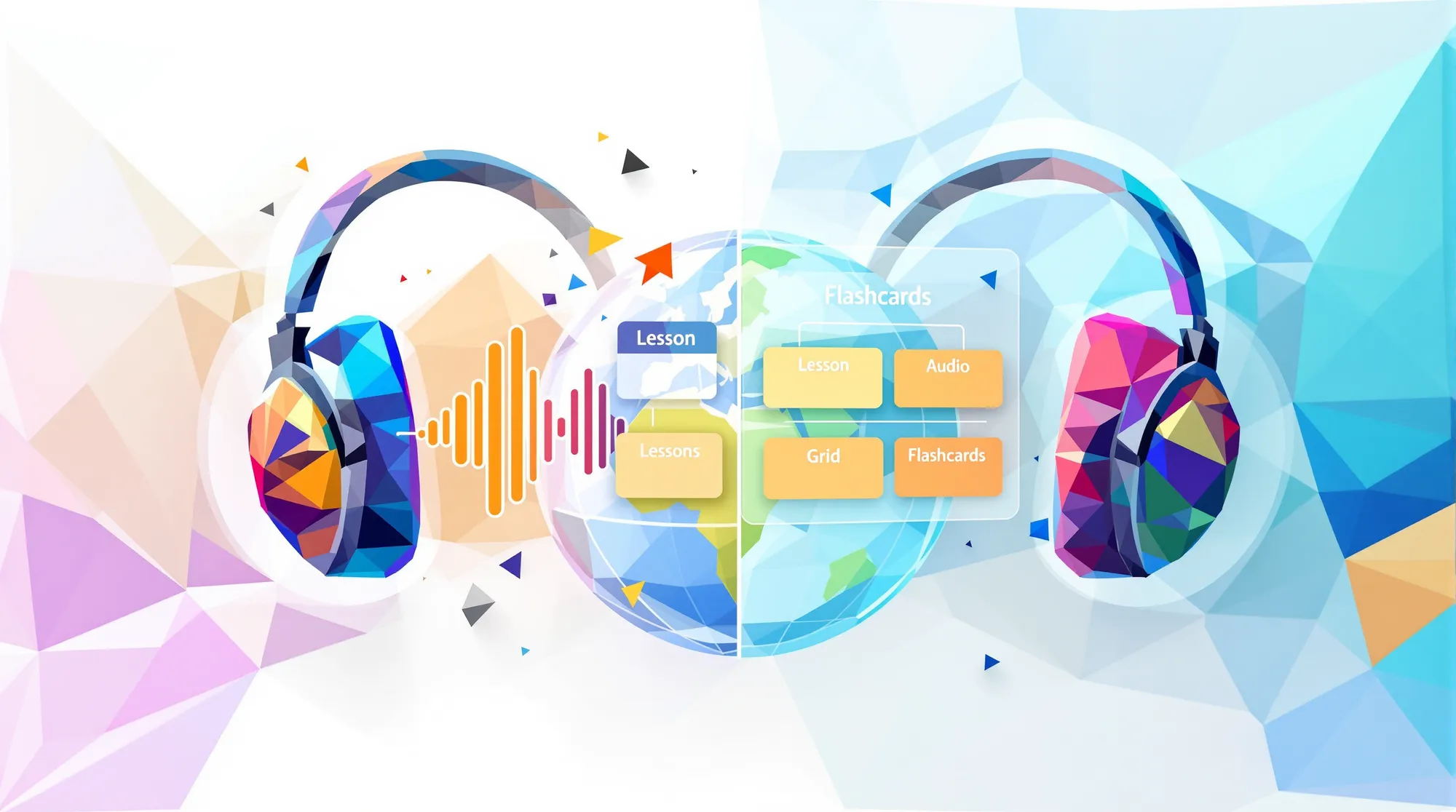
You're serious about learning a new language, and you're ready to invest in a premium solution. Pimsleur and Babbel consistently rise to the top of "best language app" lists, and for good reason – they both offer structured, effective learning experiences. But which one is truly right for your goals in 2026?
This isn't just another surface-level comparison. We've put both Pimsleur and Babbel through their paces to give you an honest, hands-on breakdown. We'll reveal their core strengths, their undeniable weaknesses, and even tease a third option that addresses a critical gap neither fully fills.
Notes
Quick answer for the impatient: Pimsleur excels for hands-free listening and pronunciation, while Babbel is better for structured grammar and vocabulary, but neither offers truly dynamic, real-time conversation.
🥊 Pimsleur vs Babbel: The 30-Second Verdict
🎧 Pimsleur: Master the Sound of a Language
Pimsleur's methodology is legendary, and for good reason. It's built on the "Pimsleur Method," an audio-only, spaced-repetition system designed to get you speaking and understanding from day one. You'll spend 30 minutes a day repeating phrases, answering prompts, and building a foundational understanding of the language's rhythm and intonation.
Strengths:
- Exceptional Pronunciation: If sounding like a native is your top priority, Pimsleur is unmatched. Its audio-first approach forces you to mimic and internalize correct pronunciation and accent.
- Hands-Free Learning: Perfect for commutes, workouts, or chores. You can learn effectively without looking at a screen.
- Core Conversational Phrases: You'll quickly gain confidence in basic, practical conversations.
- Spaced Repetition: The scientifically proven method ensures long-term retention of vocabulary and phrases.
Weaknesses:
- Audio-Only Limitation: While a strength for some, it means minimal reading or writing practice. You'll need supplementary resources for literacy.
- Light on Grammar: Grammar rules are absorbed implicitly, not explicitly taught. This can be frustrating for learners who prefer structured explanations.
- Scripted & One-Way: You're responding to prompts, not engaging in dynamic, real-time conversation.
- Expensive: At around $21/month, it's a premium price point, especially if you need multiple levels.
Become bilingual in 30 days with Univext!
Start a lesson with our teacher for free and become bilingual like our 100,000 students!
📚 Babbel: Structured Learning for Practical Communication
Babbel takes a more traditional, structured approach to language learning, focusing on practical vocabulary and grammar within bite-sized lessons. It's designed to get you conversing in real-life situations, emphasizing useful phrases and sentence structures.
Strengths:
- Structured Grammar: Babbel excels at breaking down grammar rules in an understandable way, integrating them into lessons rather than isolating them.
- Practical Vocabulary: Lessons focus on words and phrases you'll actually use in everyday scenarios.
- Bite-Sized Lessons: At 10-15 minutes each, lessons are easy to fit into a busy schedule.
- Speech Recognition: While not perfect, it helps you practice speaking and get feedback on your pronunciation.
- Podcasts & Games: Offers supplementary content to keep learning engaging and varied.
- Per-Language Subscription: You pay for access to one language, which can be cost-effective if you're only focused on one.
Weaknesses:
- Limited Live Conversation: While it has role-plays, they are still scripted and don't provide the spontaneity of real dialogue.
- Pronunciation Not as Deep as Pimsleur: While good, it doesn't offer the same immersive audio training as Pimsleur.
- Can Feel Repetitive: The lesson structure, while effective, can sometimes feel a bit monotonous over time.




Join more than 100,000 students learning on Univext
⚖️ Which Should You Choose?
Pick Pimsleur if:
- Your primary goal is excellent pronunciation and listening comprehension.
- You prefer hands-free, audio-based learning.
- You want to quickly build confidence in basic spoken conversations.
- You don't mind supplementing with other resources for reading/writing/grammar.
Pick Babbel if:
- You want a well-rounded approach with explicit grammar explanations.
- You prefer structured, bite-sized lessons.
- You're looking for practical vocabulary for everyday situations.
- You want to pay for access to a single language.
🤖 The Third Option: An AI Tutor That Actually Talks Back
Pimsleur is brilliant for building your ear and getting your tongue around new sounds, but it's fundamentally a one-way, scripted experience. Babbel teaches you the building blocks of a language and how to construct sentences, but its "conversation practice" is still largely limited to pre-programmed scenarios. Neither truly gives you the dynamic, unpredictable, and personalized two-way conversation that is essential for fluency.
This is where Univext's Umi comes in. Imagine an AI tutor that's available 24/7, ready to chat about anything, adapting to your skill level in real-time, correcting your mistakes, and expanding your vocabulary – just like a human tutor, but without the scheduling hassle or prohibitive cost. Umi provides unlimited AI conversation practice, allowing you to apply everything you've learned from apps like Pimsleur and Babbel in a truly interactive environment.
One subscription to Umi covers 9 languages, making it a far more cost-effective solution than stacking premium app subscriptions if you're a polyglot or just exploring different languages. While Pimsleur and Babbel are excellent for their specific niches, Umi provides the crucial conversation layer they're missing, transforming passive learning into active, engaging dialogue. It's not about replacing them, but enhancing your learning journey by giving you the practice you need to truly internalize and use the language.
Become bilingual in 30 days with Univext!
Start a lesson with our teacher for free and become bilingual like our 100,000 students!
❓ FAQ
Is Pimsleur or Babbel better for beginners? Both are excellent for beginners. Pimsleur gets you speaking and understanding sounds quickly, while Babbel provides a more structured introduction to grammar and vocabulary. Your learning style will dictate which is "better."
Which is more expensive? Pimsleur is generally more expensive, costing around $21/month. Babbel is typically around $14/month when purchased annually, making it the more budget-friendly option for a single language.
Do they have real speaking practice? Pimsleur offers excellent pronunciation drills and response practice, but it's scripted. Babbel has speech recognition and role-plays, but these are also pre-programmed. Neither offers truly dynamic, free-form conversation with a live person or advanced AI.
Can I combine them with an AI tutor? Absolutely! Combining Pimsleur or Babbel with an AI tutor like Umi is highly recommended. Pimsleur builds your listening and pronunciation foundation, Babbel teaches you grammar and vocabulary, and an AI tutor provides unlimited, real-time conversation practice to solidify everything. For more on this, check out our guide to the best AI language tutors.
Ready to experience truly dynamic language practice? Start a free lesson with Umi and see how an AI tutor can accelerate your journey to fluency. For deeper dives into these platforms, read our full Babbel review and Pimsleur review.